Monday, February 29, 2016

Science title for high school: We Are the Weather Makers by Tim Flannery, adapted by Sally M. Walker


Bibliographic Information:


Walker, S. M., & Flannery, T. (2009). We Are the Weather Makers: The History of Climate Change. Somerville, Mass: Candlewick.

Plot description:  


In 2001 Tim Flannery wrote The Weather Makers - a groundbreaking text on the undeniable facts and uncertain future being faced by planet Earth.  In 2009, Sally M. Walker adapted his work for the young adult population - "the generation who will act on climate change."  Regardless of the fact that this edition has been customized for a younger readership, the science is still incredibly thorough and the facts are eye-opening.  This book is unique in that it explores the past, present and future in equal measures, so that the reader is left with a holistic view of the root causes and likely consequences of climate change.  Fear not!  Young readers will not be left feeling hopeless.  Flannery and Walker have created a book that empowers young adults to take charge of their future by being realistic about the hard science of climate change and what they can meaningfully accomplish to fight its advance.


Quantitative reading level:


ATOS Book Level: 10.0
Interest Level: Grades 9 and up
Lexile Measure: 1280L


Qualitative reading analysis: 


We are the Weather Makers starts with an introduction by the author and is then split into three parts - Earth and the Climate Connection, Endangered Habitats, and What's to Come.  Each on the three parts is further split into manageable chapters, each with a "Call to Action."  After the meat of the book, there is a section of source notes, credits for the images used in the text, and the index.

It is unnecessary for readers to come to this book with any prior knowledge - in fact, young readers new to these ideas will come to the pages without any preconceived ideas about the subject matter.  Walker has done a wonderful job making the language accessible without "dumbing down" the very serious information Flannery has collected.

While the ATOS level indicates a high level of language skill, the book is actually very approachable, particularly with adult guidance.  This is a knotty topic where it is important to allow kids to stretch in order to grasp what they are reading.


Content area:


Science - Environmental Science

Content area standard:


CCSS.ELA-Literacy.RST.9-10.1
Cite specific textual evidence to support analysis of science and technical texts, attending to the precise details of explanations or descriptions.
CCSS.ELA-Literacy.RST.9-10.2
Determine the central ideas or conclusions of a text; trace the text's explanation or depiction of a complex process, phenomenon, or concept; provide an accurate summary of the text.
CCSS.ELA-Literacy.RST.9-10.4
Determine the meaning of symbols, key terms, and other domain-specific words and phrases as they are used in a specific scientific or technical context relevant to grades 9-10 texts and topics.
CCSS.ELA-Literacy.RST.9-10.5
Analyze the structure of the relationships among concepts in a text, including relationships among key terms (e.g., force, friction, reaction force, energy).
CCSS.ELA-Literacy.RST.9-10.6
Analyze the author's purpose in providing an explanation, describing a procedure, or discussing an experiment in a text, defining the question the author seeks to address.
CCSS.ELA-Literacy.RST.9-10.7
Translate quantitative or technical information expressed in words in a text into visual form (e.g., a table or chart) and translate information expressed visually or mathematically (e.g., in an equation) into words.
CCSS.ELA-Literacy.RST.9-10.8
Assess the extent to which the reasoning and evidence in a text support the author's claim or a recommendation for solving a scientific or technical problem.
CCSS.ELA-Literacy.RST.9-10.9
Compare and contrast findings presented in a text to those from other sources (including their own experiments), noting when the findings support or contradict previous explanations or accounts.


Curriculum suggestions: 


By the time they have reached high school, most teens will have been made aware of climate change.  However, they might not have received the kind of well-rounded view that Flannery and Walker provide.  After they read the book, an interesting project might be to create an interactive climate change timeline.  Alternately, an interactive climate change world map would be enlightening. Students could compile data on certain areas of the globe and outline the causes and effects of climate change on that area.  Why are some areas more hard hit?  What are some common features that countries causing the biggest concerns share?


Supporting digital content:


Thinking About Climate Change - http://www.theweathermakers.org/pdf/tacc.pdf
Real Climate - http://www.realclimate.org/
Climate Resources - http://oceanservice.noaa.gov/education/pd/climate/welcome.html 


Awards:


- Winner of Santa Monica Public Library’s Green Prize for Sustainable Literature, 2010


Personal thoughts:


Climate change can be a scary and overwhelming topic.  Sally M. Walker does an excellent job of adapting Flannery's text without condescending to young readers.  The authors paint a full picture of the climate crisis while still allowing the reader to imagine that they themselves hold some power in the efforts to halt climate change (as indeed they do).  

Science picture book: Puffling Patrol by Ted and Betsy Lewin


Product Details

Bibliographic Information:

Lewin, T. (2012). Puffling Patrol. New York: Lee & Low Books.


Plot description:  

The authors, Ted and Betsy Lewin, recount their first trip to the Westman Islands to witness the work of the Puffling Patrol. At the end of each summer, countless adult puffins leave the islands after spending the warmer months caring for their new babies. Sometimes the youngest puffins are too little and weak to make it to sea, and they head for the town lights rather than the water. It is the job of the Puffling Patrol, a group of children who call the Westmore Islands home, who scour the streets to find the lost puffins. On one night, Ted and Betsy go along on a patrol where one puffin is found and brought to the Natural History Museum. After the puffins are strong enough to survive on their own, the children of the Puffling Patrol bring them to the beach and release them to the sea.


Quantitative reading level:

ATOS Book Level: 5.2
Interest Level: Grades 2-4
Lexile Measure: 910L


Qualitative reading analysis: 


The book begins with an introduction by Ted and Betsy Lewin describing the Icelandic cliff dwellings of the puffins, and the cycle that brings them back each year.Then the authors tell the story of their experience with the Puffling Patrol. After the story there are three informational sections called "Atlantic Puffin Facts," "The Volcano of 1973," and "Vestmannaeyjar's Puffins Today." There is also a one page glossary and pronunciation guide.

Particularly young readers will need the help of an adult to help with pronunciation. More advanced readers will enjoy the challenge of learning new Icelandic names and words. Most readers will benefit from a quick introduction to the geography, which is important to the story. The Lewins do a nice job of introducing other concepts relating to animal habitats, climate change and the importance of human efforts to help animals and the environment. Puffling Patrol is an excellent read-aloud book, and the illustrations are captivating. While the reading level is on the high side for the interest level, it is an easily understandable text with a little adult guidance.


Content area:

Science -  Ecology.
Social Studies - Geography. 


Content area standard: 

CCSS.ELA-Literacy.RI.2.1
Ask and answer such questions as who, what, where, when, why, and how to demonstrate understanding of key details in a text.

CCSS.ELA-Literacy.RI.2.2
Identify the main topic of a multiparagraph text as well as the focus of specific paragraphs within the text.

CCSS.ELA-Literacy.RI.2.3
Describe the connection between a series of historical events, scientific ideas or concepts, or steps in technical procedures in a text.

CCSS.ELA-Literacy.RI.2.4
Determine the meaning of words and phrases in a text relevant to a grade 2 topic or subject area.

CCSS.ELA-Literacy.RI.2.5
Know and use various text features (e.g., captions, bold print, subheadings, glossaries, indexes, electronic menus, icons) to locate key facts or information in a text efficiently.

CCSS.ELA-Literacy.RI.2.6
Identify the main purpose of a text, including what the author wants to answer, explain, or describe.

CCSS.ELA-Literacy.RI.2.7
Explain how specific images (e.g., a diagram showing how a machine works) contribute to and clarify a text.

CCSS.ELA-Literacy.RI.2.8
Describe how reasons support specific points the author makes in a text.


Curriculum suggestions:  

 Puffling Patrol is a good introduction to the idea that humans impact the ecological balance in the world.  The Lewins describe the many factors that play into the puffins' difficulty in returning the sea, one of which is the warming temperature of the water.  They also imply that the young puffins are confused by the city lights.   While human interaction is ultimately what save the vulnerable puffins, it is human actions that made them in need of saving.  Young students will be able to connect the dots with the help of their teacher.

Supporting digital content:

Iceland Puffins - http://video.nationalgeographic.com/video/puffin_atlantic_iceland
Atlantic Puffin Facts for Kids - http://www.animalfactguide.com/animal-facts/atlantic-puffin/


Awards:

  - Choices, Cooperative Children's Book Center (CCBC)
  - Green Earth Book Award Honor Book, The Nature Generation
  - Nonfiction Honor List, VOYA
  - Outstanding Children's Book Award Finalist, Animal Behavior Society


Personal thoughts:

Puffling Patrol is a charming story with a serious message. This book does a wonderful job explaining human impact (both bad and good) without being scary or preachy to young children. The story will allow children to ask questions of their teacher, librarian or parent that they might not otherwise know how to frame. I highly recommend this book for any library servicing children in the K-3 range.

Math picture book: We All Went on Safari by Laurie Krebs and Julia Cairns


Bibliographic Information:

Krebs, L. (2004). We All Went On Safari (Reprint edition). Barefoot Books.

Plot description:  

Arusha, Mosi, and their friends and family are all going on safari. Along the way they cross the rocky glens and grasslands that make up the Tanzanian countryside. At every stop along their journey, they count the animals that call East Africa home. In addition to naming the number in English, each number is also given in Swahili (one is moja, two is mbili, etc.) They encounter wildebeests, elephants and hippos, among others. The group is made of young and old alike, all dressed in beautifully colorful clothing and donning traditional head wear and jewelry. At the end of their long day's journey, they all settle settle down in the "sunset's fading light" for a cozy campfire.

Quantitative reading level:

ATOS Book Level: 4.0
Interest Level: Grades PreK-2
Lexile Measure: 910L


Qualitative reading analysis: 


The book is relatively short, with two pages devoted to each number, one through ten. Each number is given a short rhyme that describes something about the African landscape and then a given number of indigenous animals. The illustrations are bright and sunny, with enough detail to keep children interested, but not so much that they will become confused or overwhelmed. After the story proper, there are two pages dedicated to describing the animals of Tanzania, a page about the Maasai people of East Africa, a page about the Swahili names mentioned in the text, a page of facts about Tanzania, a map of Tanzania, and a page called "Counting in Swahili" that helps the reader pronounce the numbers given within the book.


Very young readers will struggle with pronouncing and understanding unusual words (Serengeti, intertwine, acacia), but as it is a book best read aloud, these stumbling blocks will make way for wonderful conversation. It is unnecessary that readers/listeners have any previous knowledge of the subject matter and it is equally engaging for seasoned counters and those new to the skill alike.

Content area:


Social Studies - Geography
Mathematics - Counting

Content area standard:

CCSS.Math.Content.K.CC.B.4.a
When counting objects, say the number names in the standard order, pairing each object with one and only one number name and each number name with one and only one object.
CCSS.Math.Content.K.CC.B.4.b
Understand that the last number name said tells the number of objects counted. The number of objects is the same regardless of their arrangement or the order in which they were counted.
CCSS.Math.Content.K.CC.B.4.c
Understand that each successive number name refers to a quantity that is one larger.
CCSS.ELA-Literacy.RI.K.1
With prompting and support, ask and answer questions about key details in a text.
CCSS.ELA-Literacy.RI.K.2
With prompting and support, identify the main topic and retell key details of a text.
CCSS.ELA-Literacy.RI.K.3
With prompting and support, describe the connection between two individuals, events, ideas, or pieces of information in a text.
CCSS.ELA-Literacy.RI.K.4
With prompting and support, ask and answer questions about unknown words in a text.
CCSS.ELA-Literacy.RI.K.5
Identify the front cover, back cover, and title page of a book.
CCSS.ELA-Literacy.RI.K.6
Name the author and illustrator of a text and define the role of each in presenting the ideas or information in a text.
CCSS.ELA-Literacy.RI.K.7
With prompting and support, describe the relationship between illustrations and the text in which they appear (e.g., what person, place, thing, or idea in the text an illustration depicts).
CCSS.ELA-Literacy.RI.K.8
With prompting and support, identify the reasons an author gives to support points in a text.
CCSS.ELA-Literacy.RI.K.9
With prompting and support, identify basic similarities in and differences between two texts on the same topic (e.g., in illustrations, descriptions, or procedures).
CCSS.ELA-Literacy.RI.K.10
Actively engage in group reading activities with purpose and understanding.
   

Curriculum suggestions:  


We All Went on Safari is a perfect book for new counters and burgeoning readers. Krebs does a wonderful job of weaving in lessons about numbers (in English and Swahili), as well as interesting facts about a culture that will likely be unknown to most American children. Discussions about geography and what makes cultures alike and different will certainly crop up, with the math lesson acting as an effective vehicle.


Supporting digital content:

Counting in Swahili - https://www.youtube.com/watch?v=bGW3fS---Aw
The Maasai People - http://www.maasai-association.org/maasai.html


Awards:


2003 Book of the year award,Child Magazine
2003 Best Books of 2003, Family Fun Magazine
2004 Nominated for Kate Greenaway Award, UK
2004 Gold Practical Pre School Award
2004 Book of the Year Award-Siver medal winner Foreword Magazine
2004 Teacher's Choice Award-Learning Magazine
2004 Capitol Choices Selection 2004
2004 Oppenheim Toy Portfolio 2004 Gold Award
2005 Parent Teacher Choice Award 2005


Personal thoughts:


My children, age 4 and 8, both love We All Went on Safari. The younger child, my son, loves counting as the pages flip, while my daughter likes to try and pronounce the words in Swahili. It is a nicely interactive book that works on many levels; it is a counting book for young children, but it is also a glimpse into another culture for more mature readers.

Picture Book on an Historical Topic: Child of the Civil Rights Movement by Paula Young Shelton & Raul Colon

Image result for child of the civil rights movement

Bibliographic information: 


Shelton, P. Y. (2013). Child of the Civil Rights Movement. Dragonfly Books.


Plot description:


Paula Young Shelton is the daughter of civil rights activists Andrew Young and Jean Childs Young. In Child of the Civil Rights Movement she reveals intimate family moments as well as sweeping political atrocities and triumphs she and her family witnessed as they worked and lived alongside Dr. King and the other social activists in the 1960s.  Shelton shares her family's call to action, when they left their relatively safe home in New York to return to the Jim Crow South to participate in the march from Selma to Montgomery.  The known historical events are juxtaposed with warm memories of  Shelton's "civil rights family" - home-cooked dinners and trips to the pool with "Uncle Martin" and other members of the movement.  The book ends with Paula's family reacting to watching President Johnson sign the Voting Rights Act of 1965 on TV, and with a solemn vow from Paula to "march on" after her parents are no longer able.


Quantitative reading level:


ATOS Book Level: 7
Interest Level: Ages 5-8
Lexile Measure: AD960L


Qualitative reading analysis: 


Child of the Civil Rights Movement is told from the perspective of the author when she was a young girl.  The pages are not text-heavy, so that young readers/listeners can spend plenty of time pouring over the beautiful, soft illustrations. The book is made of six chapters that each relate a single story from the author's childhood.    At the end of the book, the author provides short biographies of the men and women who made up her "civil rights family."

The story is linear and follows a narrative flow that is easy to follow.  Particularly young readers/listeners will need help with some of the terminology used to reference the civil rights movement, though Shelton does a wonderful job introducing the topic in a gentle, childlike way.  The sentences are quite long, though they are broken up on the page like prose.

No previous knowledge is needed to understand the story, though teachers would do well to offer students a brief introduction/recap of the civil rights movement and what brought it about. Child of the Civil Rights Movement is an ideal book to read aloud to young children, since it will doubtlessly encourage questions and discussion. 

Content area:


  • English
  • Social Science: U.S History, Civil Rights Movement


Content area standard:


CCSS.ELA-Literacy.SL.1.2
Ask and answer questions about key details in a text read aloud or information presented orally or through other media.
CCSS.ELA-Literacy.SL.1.3
Ask and answer questions about what a speaker says in order to gather additional information or clarify something that is not understood.
CCSS.ELA-Literacy.RI.1.1
Ask and answer questions about key details in a text.
CCSS.ELA-Literacy.RI.1.2
Identify the main topic and retell key details of a text.
CCSS.ELA-Literacy.RI.1.3
Describe the connection between two individuals, events, ideas, or pieces of information in a text.
  

Curriculum suggestions:  


Child of the Civil Rights Movement is an ideal companion to a unit on the Civil Rights Movement.  Shelton's narrative allows children to put themselves in her shoes so that they can experience a more personal connection to the Civil Rights Movement.  Students can reflect on the book through drawing or writing.  They might draw a memory of a time when they were treated unfairly - who did they ask for help in that situation?  These experiences can be related to the experience Shelton shares in the book, and the importance of the Civil Rights Movement and the people behind it.


Supporting digital content:


Classroom resources: http://www.tolerance.org/classroom-resources
Doing justice to Martin Luther King, Jr. Day in the classroom: https://www.teachingforchange.org/doing-justice-to-mlk-day


Awards:


  • Cooperative Children’s Book Center Choices WINNER 2011
  • New York Public Library 100 Titles for Reading and Sharing WINNER
  • Bank Street Child Study Children’s Book Award FINALIST 


Other titles to consider:


619833 

Ellington was not a Street by


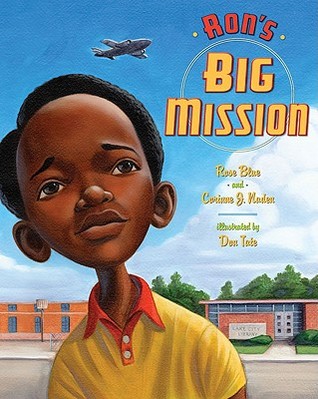
Ron's Big Mission by Rose Blue and Corinne Naden


Non-fiction historical work: They Called Themselves the K.K.K. by Susan Campbell Bartoletti


Bibliographic information:


Bartoletti, S. C. (2014). They Called Themselves the K.K.K.: The Birth of an American Terrorist Group (Reprint edition). HMH Books for Young Readers.


Plot description:  

S.C. Bartoletti takes the reader through the beginnings of the organization that eventually went by the name of the Ku Klux Klan.  Tennessee in 1866 was a racially segregated and politically volatile state.  Six men took that toxic mix and created the country's most notorious and storied hate group.  Bartoletti has carefully and exhaustively gathered dozens of poignant historical documents that help the reader understand how the United States of America allowed, and even fostered, the growth of the K.K.K.  She uses personal stories, newspaper articles, political cartoons and governmental documents that serve to underline the powerful movement that was tearing the country apart in the years directly following the Civil War.


Quantitative reading level:

ATOS Book Level:7.0
Interest Level: Grades 7-10
Lexile Measure: 1180L


Qualitative reading analysis: 


They Called Themselves the K.K.K. starts with a Table of Contents, followed by a Note to the Reader.  Bartoletti cautions the reader that she has made no attempt to censor the language or images that she has included in the book. The book is then split into manageable chapters. Each chapter includes a narrative on a given aspect of the K.K.K.'s formation and rise, and includes reproductions of original documents and photographs.  At the end of the book, Bartoletti includes a Civil Rights Timeline, as well as her Bibliography and Source Notes. 

Bartoletti uses easily understood language that will reach many levels of readers.  Some of the language used in the original period documents might be confusing or upsetting for younger readers (middle school kids), but the author does an excellent job framing the context in which they were originally produced.  Little prior knowledge is needed in order for readers to grasp all that Bartoletti offers in this book, though less mature readers might benefit from a conversation about the time period and the attitudes of the people living in those times.


Content area:

Social Studies - American History


Content area standard:

CCSS.ELA-Literacy.RH.9-10.1
Cite specific textual evidence to support analysis of primary and secondary sources, attending to such features as the date and origin of the information.
CCSS.ELA-Literacy.RH.9-10.2
Determine the central ideas or information of a primary or secondary source; provide an accurate summary of how key events or ideas develop over the course of the text.
CCSS.ELA-Literacy.RH.9-10.3
Analyze in detail a series of events described in a text; determine whether earlier events caused later ones or simply preceded them.
CCSS.ELA-Literacy.RH.9-10.4
Determine the meaning of words and phrases as they are used in a text, including vocabulary describing political, social, or economic aspects of history/social science.
CCSS.ELA-Literacy.RH.9-10.5
Analyze how a text uses structure to emphasize key points or advance an explanation or analysis.
CCSS.ELA-Literacy.RH.9-10.7
Integrate quantitative or technical analysis (e.g., charts, research data) with qualitative analysis in print or digital text.
CCSS.ELA-Literacy.RH.9-10.8
Assess the extent to which the reasoning and evidence in a text support the author's claims.
CCSS.ELA-Literacy.RH.9-10.9
Compare and contrast treatments of the same topic in several primary and secondary sources.  


Curriculum suggestions:  


Since Bartoletti has gathered so much media from the time period she writes about, an interesting way for students to look at the subject matter would be for them to compare and contrast documents portraying African Americans in that day and age, and current documents.  For example, how are caricatures of Barak Obama different from or similar to some of the caricatures in They Called Themselves the K.K.K.


Supporting digital content:


Uncovering the K.K.K. - https://www.teachervision.com/us-history/printable/46089.html
The Rise and Fall of Jim Crow - http://www.pbs.org/wnet/jimcrow/index.html


Awards:


2011 ALA Notable Children’s Books, Older Readers
Booklist 2011 Top 10 Books for Youth, Black History
2011 NCTE Orbis Pictus Recommended 
IRA Notable Books for a Global Society 2011
Booklist 2010 Editor’s Choice, Books for Youth, Nonfiction, Older Readers
Booklist Lasting Connections of 2010, Social Studies
Horn Book Fanfare, Best Books of 2010, Nonfiction
Kirkus Reviews 2010 Best Books for Teens
Publishers Weekly Best Children’s Books 2010, Nonfiction
School Library Journal Best Books 2010: Nonfiction
YALSA Award for Excellence in Nonfiction for Young Adults Finalist, 2011


Personal thoughts:


They Called Themselves the K.K.K. is an essential title for libraries serving children in grades 7-12.  Bartoletti's unflinching look (supported by more than 100 original documents and photographs) at the formation and rise of this hate group will allow readers to understand not only those event, but current events that are shockingly similar in their intent.

Historical Fiction Novel: Code Name Verity by Elizabeth Wein

Image result for code name verity

Bibliographic information:


Wein, E. (2012). Code Name Verity (First Edition edition). New York: Disney-Hyperion.


Plot description:


Queenie has been captured by Nazis in occupied France after parachuting out of the plane her best friend, Maddie, was piloting.  The two were on a Allie-led secret mission when their plane was compromised, forcing Queenie to escape before Maddie and the plane (presumably) crashed into the countryside.  Queenie finds herself imprisoned in an old hotel now overrun with Gestapo, being tortured and forced into revealing her story and her country's secrets.  She cleverly weaves her tale in a way that not only satisfies, but enchants her captors, allowing Queenie to extend her life a little longer.  Meanwhile, Maddie begins her own French adventure, which ultimately leads her to the Resistance, and then back to her dear friend Queenie, for one beautiful, catastrophic moment.


Quantitative reading level:


ATOS Book Level: 5.6
Interest Level: Grades 9-12
Lexile Measure: 1020L


Qualitative reading analysis: 


The first half of the book is presented as Queenie's "confession" to the Gestapo.  She alternates between her present day reality as a prisoner of the Nazis, her life in the days before her involvement in the war as she was getting to know her best friend Maddie, and the actual events leading up to her capture in occupied France.  The second half is written from Maddie's point of view, revealing her experience after the plane crash-landing and ending with her eventual return to England.

Queenie's narrative is presented in both first and third person.  Her story line is non-linear and demands particular attention to language nuances and hints.  While the language itself is not complex, the way in which Weir plays with Queenie's narrative could be confusing for less sophisticated readers. A working knowledge of the events surrounding World War II is essential to truly grasp the plot and underlying meaning of Code Name Verity

This novel is only appropriate for competent, mature readers.  High school students who are avid readers and have a known interest in history will reap the significant rewards of diving into this fantastic text.  Readers who struggle with complex structure or who are weighed down by excessive detail (which requires close attention) will quickly become disinterested in this novel.

Content area:


  • English
  • Social Science: British and French History, 1939-1945.  World War, 1939-1945.  Holocaust.  Nazis.


Content area standard:


CCSS.ELA-Literacy.RH.9-10.3
Analyze in detail a series of events described in a text; determine whether earlier events caused later ones or simply preceded them.
CCSS.ELA-Literacy.RH.9-10.4
Determine the meaning of words and phrases as they are used in a text, including vocabulary describing political, social, or economic aspects of history/social science.
CCSS.ELA-Literacy.RH.9-10.5
Analyze how a text uses structure to emphasize key points or advance an explanation or analysis.
  

Curriculum suggestions:  


The ideal classroom situation for Code Name Verity would be in an accelerated Humanities class where both the structure of the novel and the content of the text could be analyzed.  This book would be an excellent addition to curriculum surrounding World War II and the Holocaust.


Supporting digital content:


Study Guide: http://www.teachingbooks.net/media/pdf/SingleBGs/CodeNameVerity.pdf

British Air Transport Auxiliary: http://www.airtransportaux.com/

WWII memories, collected by the BBC: http://www.bbc.co.uk/history/ww2peopleswar/ 


Awards:


  • UK Literary Association Award Winner
  • Edgar Award Winner
  • Printz Honor Book
  • Boston Globe/Horn Book Award Honor Book
  • Shortlisted for the 2013 CILIP Carnegie Award
  • Golden Kite Award Honor Book
  • Shortlisted for the Scottish Children's Book Award
  • Catalyst Book Award Winner (East Lanarkshire County Council, Scotland)


Series information:


Code Name Verity is part of the "Young Pilots" series, which also includes Rose Under Fire and Black Dove, White Raven.  All titles in the series are authored by Elizabeth Wein.

Poetry for youth for K-5 students: Go!: Poetry in Motion by Dee Lillegard and Valeri Gorbachev


Bibliographic Information:


Lillegard, D. (2006). Go!: Poetry in Motion. New York: Knopf Books for Young Readers.


Plot description:  

There are so many things that go - garbage trucks, school buses, police cars and jets.  Lillegard has created a series of short, catchy poems about the countless things that children encounter in their lives that move, slip, fly and turn.  She includes things that kids might see in the summer (ferris wheel and lawn mowers) and those that are most common in winter (skis and sleds).  Anything that a child can think of that moves around them during their days, is most likely included in this cute collection.  Coupled with the poems are Valeri Gorbachev's charming illustrations; a cow mows the lawn, while pigs, ducks and foxes get on the school bus.  The illustrations give a friendly, warm impression that will resonate with the youngest of listeners/readers.  The book radiates positivity and energy, that will surely inspire kids and adults alike to get on the move!

Quantitative reading level:


ATOS Book Level: 2.3
Interest Level: Grades K-2


Qualitative reading analysis: 


Go!: Poetry in Motion consists of 34 short poems ranging from three to five lines, each with a bold title.   The lines of the poem are each between two and seven words.  Each poem conveys a simple idea about the item - the wheelbarrow carries stones, the ice skates slip and slide, and the speedboat sprays and splashes.  Small children will love the lilting tone of the poems, while new readers will appreciate the rhymes that help them make it to the end of the poem.  Some of the words might be challenging for new readers, but particularly adventurous learners will have fun with the clever word couplings.  Both new readers and those who have yet to master the task will enjoy Gorbechev's lively illustrations.  The pages practically vibrate with the dynamic and exciting energy that the pictures provide.

Content area:


English - Poetry

Content area standard:


CCSS.ELA-Literacy.RL.1.1
Ask and answer questions about key details in a text.
CCSS.ELA-Literacy.RL.1.2
Retell stories, including key details, and demonstrate understanding of their central message or lesson.
CCSS.ELA-Literacy.RL.1.3
Describe characters, settings, and major events in a story, using key details.
CCSS.ELA-Literacy.RL.1.4
Identify words and phrases in stories or poems that suggest feelings or appeal to the senses.
CCSS.ELA-Literacy.RL.1.7
Use illustrations and details in a story to describe its characters, setting, or events.
CCSS.ELA-Literacy.RL.1.9
Compare and contrast the adventures and experiences of characters in stories.
CCSS.ELA-Literacy.RL.1.10
With prompting and support, read prose and poetry of appropriate complexity for grade


Curriculum suggestions: 


Go!:Poetry in Motion would be a perfect introduction to poetry for K-2nd grade students.  Children will be motivated to come up with their own rhymes about the the familiar things in their lives.  Since Gorbachev's drawings are such literal translations of the poems, young learners will be able to connect the visual aspects with the written word, and can be encouraged to do so as well.


Supporting digital content:


10 Ways to Use Poetry in Your Classroom: http://www.readingrockets.org/article/10-ways-use-poetry-your-classroom
Poetry Lessons for Kids: http://www.poetry4kids.com/blog/lessons/poetry-writing-lessons/


Personal thoughts:


This collection of short poems has broad appeal.  Students who are interested in things that go - cars, buses, airplanes - will delight in the fun, upbeat tempo of the book.  Students who love learning new words and trying them out will adore the bite-sized poems that are never overwhelming or too wordy.  This book is a great addition to any classroom or library that serves young children, and would work particularly well as a read-aloud book.


Hook:


Dee Lillegard's cheerful poems will have kids clamoring to talk about all of the things in their lives that GO!  Valeri Gorbechev's lively illustrations are perfect companions to these short poems and will keep kids engaged as they enjoy the experience of connecting with poetry. 

Classic/Contemporary Novel: Frankenstein and Teen Frankenstein


Bibliographic Information:


Shelley, M. (1707). Frankenstein (Penguin Classics) Reissue edition by Shelley, Mary (2003) Paperback (Reissue edition edition). Penguin Classics.


Plot description: 


Near the end of the 18th century, Robert Walton and his crew are in the midst of a long journey, trying to find a passage from Russia to the Pacific Ocean.  They happen upon Victor Frankenstein, near death from his arduous trek that has culminated in the Arctic circle.  When Walton brings him aboard, Victor tells his remarkable and chilling tale.  He created a "monster" from the body parts of several corpses.  The realization of what he had done forced Victor to flee his home and the monster.  The monster committed several atrocious crimes, including the murders of Victor's brother and his new bride, in revenge for being abandoned and alienated by his creator.  The only thing that the monster asked of Victor was for him to create a companion for him, which Victor promises to do but later changes his mind.  Walton learns that Victor is currently chasing the monster, wanting to end the wretched being's life.  The monster eventually appears and tells Walton his story.  When Victor eventually dies, the monster despondently disappears into the Arctic wild.


Quantitative reading level:


ATOS Book Level: 9.8
Interest Level: Grades 9 and up.
Lexile Measure: HL510L


Qualitative reading analysis: 


Frankenstein has a structure that demands that the reader is paying attention.  The book begins Robert Walton's letters home, in which he relates his initial meeting with Victor Frankenstein.  From there, the novel is split into chapters devoted to Victor telling his own story in a first person narrative.  Near the end of the book, Walton resumes his letter writing.  He relates the story of his meeting with the monster, who tells his own story to Walton.

This structure, which at some points is a story within a story within a story, will be lost on readers who are unused to sophisticated plot construction.  The language, though certainly of its time, is still accessible to the average reader.  As long as competent teen readers take the text slowly, they will get swept up in the story.  The structure lends itself to the themes of the novel in a way that will intrigue precocious readers. 

Content area:


English


Content area standard:


CCSS.ELA-Literacy.RL.11-12.1
Cite strong and thorough textual evidence to support analysis of what the text says explicitly as well as inferences drawn from the text, including determining where the text leaves matters uncertain.
CCSS.ELA-Literacy.RL.11-12.2
Determine two or more themes or central ideas of a text and analyze their development over the course of the text, including how they interact and build on one another to produce a complex account; provide an objective summary of the text.
CCSS.ELA-Literacy.RL.11-12.3
Analyze the impact of the author's choices regarding how to develop and relate elements of a story or drama (e.g., where a story is set, how the action is ordered, how the characters are introduced and developed).
CCSS.ELA-Literacy.RL.11-12.4
Determine the meaning of words and phrases as they are used in the text, including figurative and connotative meanings; analyze the impact of specific word choices on meaning and tone, including words with multiple meanings or language that is particularly fresh, engaging, or beautiful. (Include Shakespeare as well as other authors.)
CCSS.ELA-Literacy.RL.11-12.5
Analyze how an author's choices concerning how to structure specific parts of a text (e.g., the choice of where to begin or end a story, the choice to provide a comedic or tragic resolution) contribute to its overall structure and meaning as well as its aesthetic impact.
CCSS.ELA-Literacy.RL.11-12.6
Analyze a case in which grasping a point of view requires distinguishing what is directly stated in a text from what is really meant (e.g., satire, sarcasm, irony, or understatement).

Curriculum suggestions: 


Frankenstein offers a rich background for discussions about alienation and nature v. nurture. Other novels to couple with Frankenstein are Invisible Man by Ralph Ellison, Catcher in the Rye by J.D. Salinger and The Stranger by Albert Camus.  Students can explore the different things that lead to alienation - race, losing one's country, gender, adolescence, etc.  How does Shelley use language to convey alienation?  How does the format of the novel add to the theme?


Supporting digital content:


Lesson plan ideas - http://www.webenglishteacher.com/shelley.html
Talking 'Bout Regeneration - http://learning.blogs.nytimes.com/2002/09/24/talking-bout-regeneration/


Personal thoughts:


Frankenstein is a book that will resonate with almost any teenager who is brave enough to tackle the text.  While it might take readers (even advanced readers) a while to grasp the writing and the plot, once they do they will find the themes of loneliness and alienation deeply affecting.


Subjects and themes: 


Science
Scientists
Regeneration
Alienation
Loneliness
Revenge
Family
Language


Bibliographic Information:


Baker, C. (2016). Teen Frankenstein: High School Horror. New York: Feiwel & Friends.


Plot description: 


Tor Frankenstein likes to experiment.  A true scientist at heart, just like her late father, Tor lives for figuring things out and conducting wild tests with her best friend, Owen.  They have had some minor successes in their attempts to reanimate small rodents.  When Tor hits and kills a mysterious young man with her car one dark and stormy night, she makes the rash decision to bring him back to life.  Tor is completely unprepared for the repercussions of her monstrous creation.  Her life gets infinitely more complicated when she and Owen decide to bring the monster - "Adam" - to school with them. Only as Adam begins to come to grips with what has happened to him does Tor truly begin to understand the impact of her actions.

Quantitative reading level:


ATOS Book Level: 7.4
Interest Level: Grades 8-12
Lexile Measure: 1040L


Qualitative reading analysis: 


Teen Frankenstein is broken up into 40 short chapters.  Each chapter begins with one of Tor's scientific ideas or findings.  The book is entirely written in the first person, and the narrative has a chatty, natural tone.  The language is accessible and straight-forward.  Baker holds the reader's hand through plot twists and turns so that even those unfamiliar with the Frankenstein story will stay connected to the plot.  The qualitative level matches the quantitative level; the average 9th grader would have no problem navigating this text.  While this book would work best in tandem with Frankenstein, it has its own charm.  Kids who like campy horror and sci-fi will find this book attractive.


Content area:


English


Content area standard:


CCSS.ELA-Literacy.RL.11-12.1
Cite strong and thorough textual evidence to support analysis of what the text says explicitly as well as inferences drawn from the text, including determining where the text leaves matters uncertain.
CCSS.ELA-Literacy.RL.11-12.2
Determine two or more themes or central ideas of a text and analyze their development over the course of the text, including how they interact and build on one another to produce a complex account; provide an objective summary of the text.
CCSS.ELA-Literacy.RL.11-12.3
Analyze the impact of the author's choices regarding how to develop and relate elements of a story or drama (e.g., where a story is set, how the action is ordered, how the characters are introduced and developed).
CCSS.ELA-Literacy.RL.11-12.4
Determine the meaning of words and phrases as they are used in the text, including figurative and connotative meanings; analyze the impact of specific word choices on meaning and tone, including words with multiple meanings or language that is particularly fresh, engaging, or beautiful. (Include Shakespeare as well as other authors.)
CCSS.ELA-Literacy.RL.11-12.5
Analyze how an author's choices concerning how to structure specific parts of a text (e.g., the choice of where to begin or end a story, the choice to provide a comedic or tragic resolution) contribute to its overall structure and meaning as well as its aesthetic impact.
CCSS.ELA-Literacy.RL.11-12.6
Analyze a case in which grasping a point of view requires distinguishing what is directly stated in a text from what is really meant (e.g., satire, sarcasm, irony, or understatement).
  

Curriculum suggestions:  


Students should read Frankenstein first and then tackle Teen Frankenstein.  What are the common threads that run through each novel?  Do the two novels connect on a deeper level than clever plot symmetry?  Are there novels that better speak to the themes of isolation, loneliness and revenge that run through Frankenstein?  Was Baker successful in relating to modern readers, or was Shelley, an author writing nearly 200 years ago, better able to relate to the struggles of today's young adult?


Supporting digital content:


14 YA re-stagings of classic literature - http://www.bustle.com/articles/19564-14-ya-restagings-of-classic-works-of-literature
Are books about alienation just for boys? - http://www.theguardian.com/uk/2006/apr/06/books.booksnews


Personal thoughts:


There is no getting around the fact that Teen Frankenstein is vastly inferior to Frankenstein.  However, this can lead to discussions about what makes a young adult novel work or not work.  What is lost in translation when things are written through the young adult lens?  Who are some authors who are successful?  Is this book successful?  Did the author succeed in paying homage to the original?


Hook:


Being a teenager isn't easy for Tor Frankenstein.  She misses her late father, who was a kindred scientist, and she isn't interested in the normal high school activities.  In fact, she and her best friend Owen have been experimenting with reanimating dead rodents.  They are content with their small tests, until Tor hits and kills another teenager with her car.  Things get really interesting when Tor's grand experiment - her "Adam" - starts attending the same high school as her.