Showing posts with label Social Studies. Show all posts

Monday, February 29, 2016

Math picture book: We All Went on Safari by Laurie Krebs and Julia Cairns


Bibliographic Information:

Krebs, L. (2004). We All Went On Safari (Reprint edition). Barefoot Books.

Plot description:  

Arusha, Mosi, and their friends and family are all going on safari. Along the way they cross the rocky glens and grasslands that make up the Tanzanian countryside. At every stop along their journey, they count the animals that call East Africa home. In addition to naming the number in English, each number is also given in Swahili (one is moja, two is mbili, etc.) They encounter wildebeests, elephants and hippos, among others. The group is made of young and old alike, all dressed in beautifully colorful clothing and donning traditional head wear and jewelry. At the end of their long day's journey, they all settle settle down in the "sunset's fading light" for a cozy campfire.

Quantitative reading level:

ATOS Book Level: 4.0
Interest Level: Grades PreK-2
Lexile Measure: 910L


Qualitative reading analysis: 


The book is relatively short, with two pages devoted to each number, one through ten. Each number is given a short rhyme that describes something about the African landscape and then a given number of indigenous animals. The illustrations are bright and sunny, with enough detail to keep children interested, but not so much that they will become confused or overwhelmed. After the story proper, there are two pages dedicated to describing the animals of Tanzania, a page about the Maasai people of East Africa, a page about the Swahili names mentioned in the text, a page of facts about Tanzania, a map of Tanzania, and a page called "Counting in Swahili" that helps the reader pronounce the numbers given within the book.


Very young readers will struggle with pronouncing and understanding unusual words (Serengeti, intertwine, acacia), but as it is a book best read aloud, these stumbling blocks will make way for wonderful conversation. It is unnecessary that readers/listeners have any previous knowledge of the subject matter and it is equally engaging for seasoned counters and those new to the skill alike.

Content area:


Social Studies - Geography
Mathematics - Counting

Content area standard:

CCSS.Math.Content.K.CC.B.4.a
When counting objects, say the number names in the standard order, pairing each object with one and only one number name and each number name with one and only one object.
CCSS.Math.Content.K.CC.B.4.b
Understand that the last number name said tells the number of objects counted. The number of objects is the same regardless of their arrangement or the order in which they were counted.
CCSS.Math.Content.K.CC.B.4.c
Understand that each successive number name refers to a quantity that is one larger.
CCSS.ELA-Literacy.RI.K.1
With prompting and support, ask and answer questions about key details in a text.
CCSS.ELA-Literacy.RI.K.2
With prompting and support, identify the main topic and retell key details of a text.
CCSS.ELA-Literacy.RI.K.3
With prompting and support, describe the connection between two individuals, events, ideas, or pieces of information in a text.
CCSS.ELA-Literacy.RI.K.4
With prompting and support, ask and answer questions about unknown words in a text.
CCSS.ELA-Literacy.RI.K.5
Identify the front cover, back cover, and title page of a book.
CCSS.ELA-Literacy.RI.K.6
Name the author and illustrator of a text and define the role of each in presenting the ideas or information in a text.
CCSS.ELA-Literacy.RI.K.7
With prompting and support, describe the relationship between illustrations and the text in which they appear (e.g., what person, place, thing, or idea in the text an illustration depicts).
CCSS.ELA-Literacy.RI.K.8
With prompting and support, identify the reasons an author gives to support points in a text.
CCSS.ELA-Literacy.RI.K.9
With prompting and support, identify basic similarities in and differences between two texts on the same topic (e.g., in illustrations, descriptions, or procedures).
CCSS.ELA-Literacy.RI.K.10
Actively engage in group reading activities with purpose and understanding.
   

Curriculum suggestions:  


We All Went on Safari is a perfect book for new counters and burgeoning readers. Krebs does a wonderful job of weaving in lessons about numbers (in English and Swahili), as well as interesting facts about a culture that will likely be unknown to most American children. Discussions about geography and what makes cultures alike and different will certainly crop up, with the math lesson acting as an effective vehicle.


Supporting digital content:

Counting in Swahili - https://www.youtube.com/watch?v=bGW3fS---Aw
The Maasai People - http://www.maasai-association.org/maasai.html


Awards:


2003 Book of the year award,Child Magazine
2003 Best Books of 2003, Family Fun Magazine
2004 Nominated for Kate Greenaway Award, UK
2004 Gold Practical Pre School Award
2004 Book of the Year Award-Siver medal winner Foreword Magazine
2004 Teacher's Choice Award-Learning Magazine
2004 Capitol Choices Selection 2004
2004 Oppenheim Toy Portfolio 2004 Gold Award
2005 Parent Teacher Choice Award 2005


Personal thoughts:


My children, age 4 and 8, both love We All Went on Safari. The younger child, my son, loves counting as the pages flip, while my daughter likes to try and pronounce the words in Swahili. It is a nicely interactive book that works on many levels; it is a counting book for young children, but it is also a glimpse into another culture for more mature readers.

Picture Book on an Historical Topic: Child of the Civil Rights Movement by Paula Young Shelton & Raul Colon

Image result for child of the civil rights movement

Bibliographic information: 


Shelton, P. Y. (2013). Child of the Civil Rights Movement. Dragonfly Books.


Plot description:


Paula Young Shelton is the daughter of civil rights activists Andrew Young and Jean Childs Young. In Child of the Civil Rights Movement she reveals intimate family moments as well as sweeping political atrocities and triumphs she and her family witnessed as they worked and lived alongside Dr. King and the other social activists in the 1960s.  Shelton shares her family's call to action, when they left their relatively safe home in New York to return to the Jim Crow South to participate in the march from Selma to Montgomery.  The known historical events are juxtaposed with warm memories of  Shelton's "civil rights family" - home-cooked dinners and trips to the pool with "Uncle Martin" and other members of the movement.  The book ends with Paula's family reacting to watching President Johnson sign the Voting Rights Act of 1965 on TV, and with a solemn vow from Paula to "march on" after her parents are no longer able.


Quantitative reading level:


ATOS Book Level: 7
Interest Level: Ages 5-8
Lexile Measure: AD960L


Qualitative reading analysis: 


Child of the Civil Rights Movement is told from the perspective of the author when she was a young girl.  The pages are not text-heavy, so that young readers/listeners can spend plenty of time pouring over the beautiful, soft illustrations. The book is made of six chapters that each relate a single story from the author's childhood.    At the end of the book, the author provides short biographies of the men and women who made up her "civil rights family."

The story is linear and follows a narrative flow that is easy to follow.  Particularly young readers/listeners will need help with some of the terminology used to reference the civil rights movement, though Shelton does a wonderful job introducing the topic in a gentle, childlike way.  The sentences are quite long, though they are broken up on the page like prose.

No previous knowledge is needed to understand the story, though teachers would do well to offer students a brief introduction/recap of the civil rights movement and what brought it about. Child of the Civil Rights Movement is an ideal book to read aloud to young children, since it will doubtlessly encourage questions and discussion. 

Content area:


  • English
  • Social Science: U.S History, Civil Rights Movement


Content area standard:


CCSS.ELA-Literacy.SL.1.2
Ask and answer questions about key details in a text read aloud or information presented orally or through other media.
CCSS.ELA-Literacy.SL.1.3
Ask and answer questions about what a speaker says in order to gather additional information or clarify something that is not understood.
CCSS.ELA-Literacy.RI.1.1
Ask and answer questions about key details in a text.
CCSS.ELA-Literacy.RI.1.2
Identify the main topic and retell key details of a text.
CCSS.ELA-Literacy.RI.1.3
Describe the connection between two individuals, events, ideas, or pieces of information in a text.
  

Curriculum suggestions:  


Child of the Civil Rights Movement is an ideal companion to a unit on the Civil Rights Movement.  Shelton's narrative allows children to put themselves in her shoes so that they can experience a more personal connection to the Civil Rights Movement.  Students can reflect on the book through drawing or writing.  They might draw a memory of a time when they were treated unfairly - who did they ask for help in that situation?  These experiences can be related to the experience Shelton shares in the book, and the importance of the Civil Rights Movement and the people behind it.


Supporting digital content:


Classroom resources: http://www.tolerance.org/classroom-resources
Doing justice to Martin Luther King, Jr. Day in the classroom: https://www.teachingforchange.org/doing-justice-to-mlk-day


Awards:


  • Cooperative Children’s Book Center Choices WINNER 2011
  • New York Public Library 100 Titles for Reading and Sharing WINNER
  • Bank Street Child Study Children’s Book Award FINALIST 


Other titles to consider:


619833 

Ellington was not a Street by


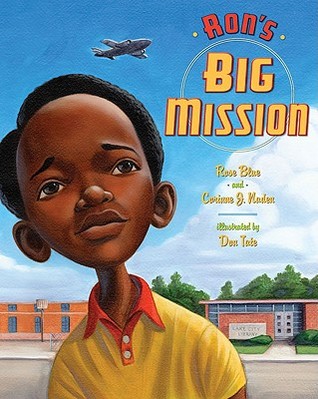
Ron's Big Mission by Rose Blue and Corinne Naden


Non-fiction historical work: They Called Themselves the K.K.K. by Susan Campbell Bartoletti


Bibliographic information:


Bartoletti, S. C. (2014). They Called Themselves the K.K.K.: The Birth of an American Terrorist Group (Reprint edition). HMH Books for Young Readers.


Plot description:  

S.C. Bartoletti takes the reader through the beginnings of the organization that eventually went by the name of the Ku Klux Klan.  Tennessee in 1866 was a racially segregated and politically volatile state.  Six men took that toxic mix and created the country's most notorious and storied hate group.  Bartoletti has carefully and exhaustively gathered dozens of poignant historical documents that help the reader understand how the United States of America allowed, and even fostered, the growth of the K.K.K.  She uses personal stories, newspaper articles, political cartoons and governmental documents that serve to underline the powerful movement that was tearing the country apart in the years directly following the Civil War.


Quantitative reading level:

ATOS Book Level:7.0
Interest Level: Grades 7-10
Lexile Measure: 1180L


Qualitative reading analysis: 


They Called Themselves the K.K.K. starts with a Table of Contents, followed by a Note to the Reader.  Bartoletti cautions the reader that she has made no attempt to censor the language or images that she has included in the book. The book is then split into manageable chapters. Each chapter includes a narrative on a given aspect of the K.K.K.'s formation and rise, and includes reproductions of original documents and photographs.  At the end of the book, Bartoletti includes a Civil Rights Timeline, as well as her Bibliography and Source Notes. 

Bartoletti uses easily understood language that will reach many levels of readers.  Some of the language used in the original period documents might be confusing or upsetting for younger readers (middle school kids), but the author does an excellent job framing the context in which they were originally produced.  Little prior knowledge is needed in order for readers to grasp all that Bartoletti offers in this book, though less mature readers might benefit from a conversation about the time period and the attitudes of the people living in those times.


Content area:

Social Studies - American History


Content area standard:

CCSS.ELA-Literacy.RH.9-10.1
Cite specific textual evidence to support analysis of primary and secondary sources, attending to such features as the date and origin of the information.
CCSS.ELA-Literacy.RH.9-10.2
Determine the central ideas or information of a primary or secondary source; provide an accurate summary of how key events or ideas develop over the course of the text.
CCSS.ELA-Literacy.RH.9-10.3
Analyze in detail a series of events described in a text; determine whether earlier events caused later ones or simply preceded them.
CCSS.ELA-Literacy.RH.9-10.4
Determine the meaning of words and phrases as they are used in a text, including vocabulary describing political, social, or economic aspects of history/social science.
CCSS.ELA-Literacy.RH.9-10.5
Analyze how a text uses structure to emphasize key points or advance an explanation or analysis.
CCSS.ELA-Literacy.RH.9-10.7
Integrate quantitative or technical analysis (e.g., charts, research data) with qualitative analysis in print or digital text.
CCSS.ELA-Literacy.RH.9-10.8
Assess the extent to which the reasoning and evidence in a text support the author's claims.
CCSS.ELA-Literacy.RH.9-10.9
Compare and contrast treatments of the same topic in several primary and secondary sources.  


Curriculum suggestions:  


Since Bartoletti has gathered so much media from the time period she writes about, an interesting way for students to look at the subject matter would be for them to compare and contrast documents portraying African Americans in that day and age, and current documents.  For example, how are caricatures of Barak Obama different from or similar to some of the caricatures in They Called Themselves the K.K.K.


Supporting digital content:


Uncovering the K.K.K. - https://www.teachervision.com/us-history/printable/46089.html
The Rise and Fall of Jim Crow - http://www.pbs.org/wnet/jimcrow/index.html


Awards:


2011 ALA Notable Children’s Books, Older Readers
Booklist 2011 Top 10 Books for Youth, Black History
2011 NCTE Orbis Pictus Recommended 
IRA Notable Books for a Global Society 2011
Booklist 2010 Editor’s Choice, Books for Youth, Nonfiction, Older Readers
Booklist Lasting Connections of 2010, Social Studies
Horn Book Fanfare, Best Books of 2010, Nonfiction
Kirkus Reviews 2010 Best Books for Teens
Publishers Weekly Best Children’s Books 2010, Nonfiction
School Library Journal Best Books 2010: Nonfiction
YALSA Award for Excellence in Nonfiction for Young Adults Finalist, 2011


Personal thoughts:


They Called Themselves the K.K.K. is an essential title for libraries serving children in grades 7-12.  Bartoletti's unflinching look (supported by more than 100 original documents and photographs) at the formation and rise of this hate group will allow readers to understand not only those event, but current events that are shockingly similar in their intent.